Month: May 2015

  • Pancit Palabok

    Pancit Palabok

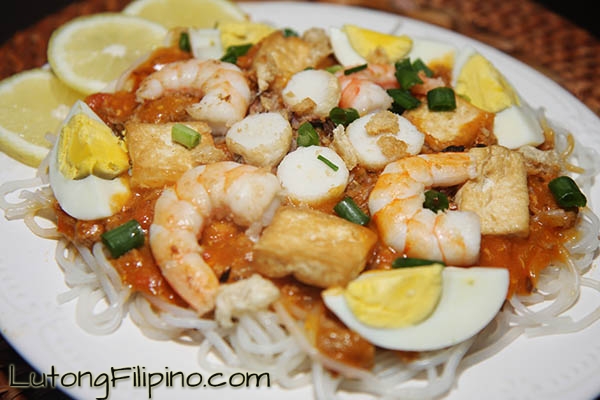
    Who doesn’t love a good noodle dish? Pancit, or noodles, can be found fresh in open air markets and various supermarkets. Local restaurants each have their own spin on various Filipino noodle dishes. Eateries with special emphasis on noodles are often called panciterias. Each panciteria will offer their own version of Pancit Palabok. This is a dish of Chinese origin with a distinct Filipino flavor. The ever present bihon, or rice noodles, covered with a thick shrimp sauce with garlic, onion, pork, annato (an orange peppery spice frequently found in southeast Asian cuisine), and fish sauce. It is left to thicken and then tossed with the noodles.

    In this dish, it’s all about the toppings. Common ones include cooked shrimp, tinapa (smoked fish) flakes, chicharon (pork rinds), hard boiled eggs, fried minced garlic, tofu, scallions (green onions), and lemon juice. Some chefs prefer calamansi juice, often called the Philippine lime or calamondin. Many of these items can be found in a local Asian market. These flavors are all traditionally Filipino – the brightness of the lemon pairs well with the saltiness of the chicharon and tinapa. The richness of the shrimp sauce cut by the green onion. There’s also a mix of textures – you get a lovely crunch from the tinapa and chicharon while the egg is soft and creamy. Southeast cuisine is all about using fresh ingredients and combining them in a way that highlights each flavor while creating cohesive contrasts. The end result? A delicious Pancit Palabok – a satisfying, quintessentially Filipino dish.

    [yumprint-recipe id=’29’]
  • Pork Sisig

    Pork Sisig

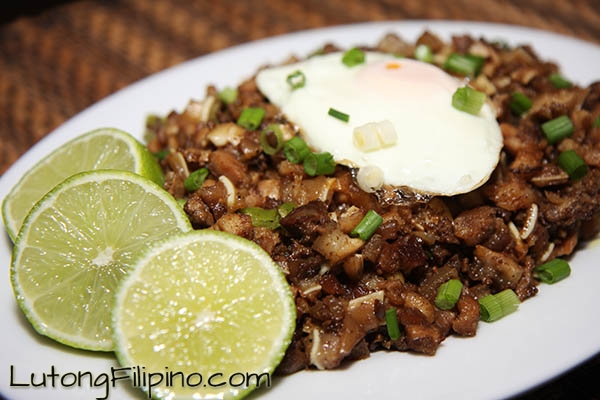
    Sisig translates to “snack on something sour” in Kapampangan. The dish originates from locals who bought pig heads from agents of the Clark Air Base. Pig heads weren’t used to prepare food for the Air Force personnel stationed there. The late Lucinda Cunanan is famously referred to as Aling Lucing-the Sisig Queen for pioneering the dish. Today, Pampanga is championed as being the culinary capital of the Philippines.
    Pork Sisig is now a renowned dish served all over the world. Hundreds of variations have turned the dish into a household favorite. Pork sisig was usually served as an appetizer or a snack before meals. A few more ingredients and you have a full course meal. Add a tortilla or a crunchy shell and you have sisig tacos.

    The process of cooking and preparing sisig takes some time. Furthermore, the history behind sisig and what represents it to Filipino culture is beautifully symbolized on the plate. The time is worth it! A healthier rendition is seafood oriented. Instead of the pork head, a medley of mussels, tuna, milkfish and squid with mayonnaise can be served. Oxbrains, chicken, and tofu are frequently used too. Tofu is an excellent substitute for a vegetarian adaption.

    Pork sisig is popular in bars and restaurants across the Philippines. Many claim that it tastes excellent with a cold beer. Another companion of the savory dish is steamed white rice. Apparently, this not only brightens up the dish, but the flavors are concentrated. The crispy pork skin sizzling with the tender marinated, meat gives off a tangy taste and vivid aroma.

    [yumprint-recipe id=’30’]

  • Pandesal

    Pandesal

    Every cuisine has its culture’s take on the classic bread roll. Mexican cuisine has bolillos, Puerto Rico has pan de agua, China has bao zi. In Filipino cuisine, it’s a soft and pillowy roll from Spanish-Era Philippines. Pandesal (from the Spanish pan de sal, “salt bread”) is a yeast-based bread commonly used in Filipino cuisine. It originated in the 1700’s during the Spanish colonization of the country. Today, it is a popular as a breakfast food, a snack, or accompaniment to any dish. Almost all bakeries and bake shops in the Philippines sell this iconic bread. It’s so popular; most neighborhood bakeries sell out before 8 or 9 in the morning. It’s common for bakeries to bake it both the morning and the afternoon to meet the demand.

    Oftentimes, rolling stores (on the backs of bicycles or motorcycles) will sell pandesal. Traditionally, it is made with milk, butter, sugar, salt, eggs, and flour. It is kneaded into a soft, springy consistency and then left to rise. Once risen, it is kneaded again then rolled into a log. This log is then cut into pieces and each piece is rolled in breadcrumbs before baking. Contrary to its name, the resulting bread roll is relatively sweet tasting. Pandesal can be enjoyed as a simple breakfast bread (with butter, jam, jelly, or any variety of other spreads), or used in place of any traditional bun (in a sandwich, etc.) Pandesal also freezes very well – they can be stored for up to a month in a freezer bag. 

    [yumprint-recipe id=’28’]

  • Chicken Macaroni Soup (Sopas)

    Chicken Macaroni Soup (Sopas)

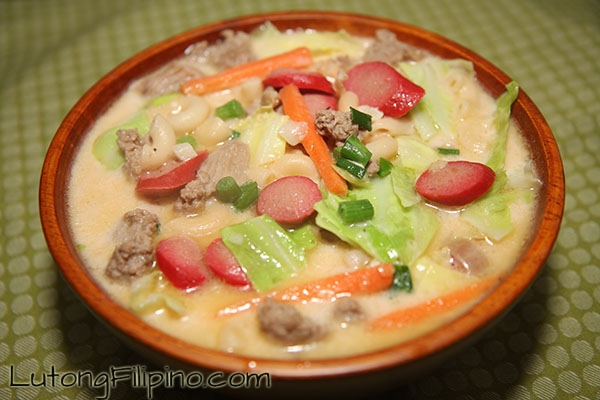
    Sopas is a term for “soup”. The yummy dish is a richer alternative to the American chicken noodle soup. The difference is how sopas uses milk to enrichen the flavor of the broth. Additionally, the bone of the chicken is left intact to give the sopas a bolder flavor. In culinary tradition, the bone of the meat maximizes the flavor. Sopas is a Filipino family favorite during the rainy season. Many families have their own twists that they pass down from generation to generation. You’re not just tasting Filipino cuisine, you are tasting how each family added their own personality to the dish. The nutrients in the dish help fight off colds and it’s very filling.

    Mirepoix is a flavoring made of chopped celery, onions, and carrots. As a base, it can be used with a broth with butter or olive oil. However, you can add spices, potatoes, rice, and beans to the soup. Elbow macaroni with a hard boiled egg on the side gives the dish color. If you don’t want chicken sopas, you can replace it with chicken liver, cut up hot dogs, pork, and even luncheon meats.

    There are no limits to how this dish can be prepared for your family. Preparation is pretty simple and easy. The best thing about Filipino cuisine is how the meals are simple and low budget, yet you are getting the best meal in a short amount of cooking time. Feel free to bring it to work in a canister and reheat it, or you can even create this dish while camping.

    [yumprint-recipe id=’31’]