Category: Bread Recipes

  • Pan de Coco

    Pan de Coco

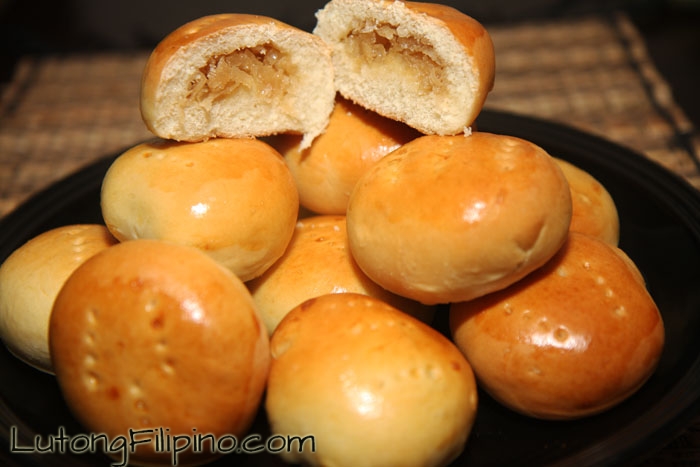
    Pan de Coco or simply coconut bread is a slightly sweet, coconut enriched buns complimenting various meals. Originally from Spain, the rich buns are now the oldest running breads in the Filipino bakery platter. The coconut buns are found all over the bakeries in Philippines and have become an absolute favorite. These soft buns are a must have with the morning milk, teas or coffees but also are served with Caribbean themed meals comprising of beans, rice or even fresh fish. Thus, Pan de Coco fulfils the needs of a snack as well as a desert. The buns are soft sweet rolls from the outside and have a blissful coconut filling form the inside. 

    The buns are fluffy and light in surface due to its precise dough preparation consisting of flour, warm milk and water, instant yeast, eggs along with a good balance of sugar and butter. If not carefully timed and watched, these buns might get under or overcooked due to its runny dough. While the dough rests before bake, a mouth-watering filling can be processed this includes coconut flakes, brown sugar preferably and butter. Each piece of bun is constant in its look and flavor. Now, the buns can be cooked traditionally or with help of a mixer. A slight sprinkle of butter or egg wash on the top of the buns will give a shine and beautiful light brown color soothing to the eyes.

    [yumprint-recipe id=’36’]
  • Spanish Bread

    Spanish Bread

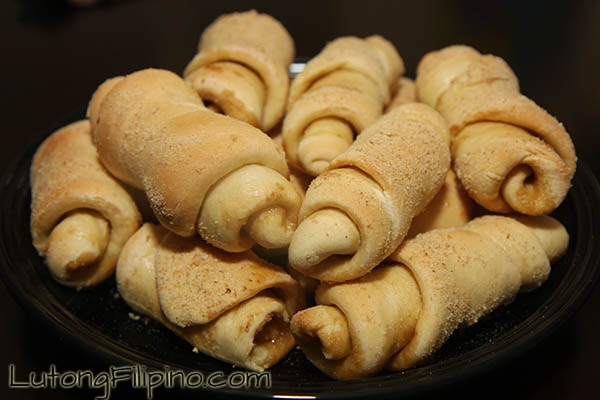
    In the Philippines, the type of bread known as Spanish bread, which is a moist and soft bread filled with margarine and sugar, is one such dish as it has nothing to do with the Spanish cuisine. The bread is a Filipino breakfast staple food whose making is similar to that of cinnamon and is just as popular as ensyamada, Pan De Coco and Pandesal. Apart from breakfasts, the bread is also popular during tea time or marienda and is normally served accompanied by milk or tea. Being a popular breakfast and tea time delicacy, this bread can be got from any bakery in the Philippines.

    Brown sugar, eggs, margarine, breadcrumbs, milk and water are some of the common ingredients used in the making of the bread. The dough is first flattened then the fillings applied on the surface of the dough. The dough is then rolled. The resulting stout like stick has a close resemblance to the Mexican bigote, which is essentially moustache shaped dough. The rolled dough is then baked to yield the sweet tasting Spanish bread. The bread comes in a variety of colors from white to yellow as well as types. However, the procedure for making the bread is the same regardless of the type. This sweet tasting bread is the ideal accompaniment to any drink from coffee, milk to soft drinks such as soda. The sweet taste of the bread also means that it does not require any kind of spreads.

    [yumprint-recipe id=’32’]

  • Pandesal

    Pandesal

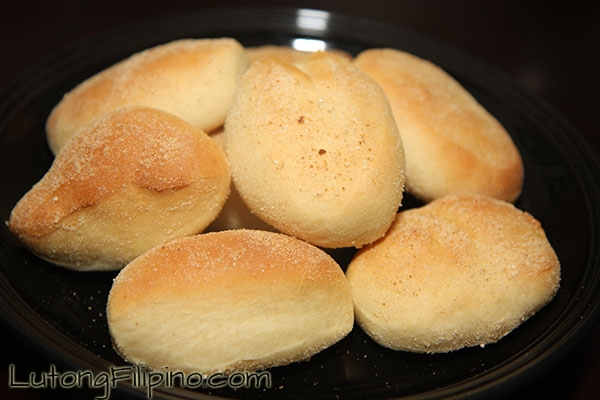
    Every cuisine has its culture’s take on the classic bread roll. Mexican cuisine has bolillos, Puerto Rico has pan de agua, China has bao zi. In Filipino cuisine, it’s a soft and pillowy roll from Spanish-Era Philippines. Pandesal (from the Spanish pan de sal, “salt bread”) is a yeast-based bread commonly used in Filipino cuisine. It originated in the 1700’s during the Spanish colonization of the country. Today, it is a popular as a breakfast food, a snack, or accompaniment to any dish. Almost all bakeries and bake shops in the Philippines sell this iconic bread. It’s so popular; most neighborhood bakeries sell out before 8 or 9 in the morning. It’s common for bakeries to bake it both the morning and the afternoon to meet the demand.

    Oftentimes, rolling stores (on the backs of bicycles or motorcycles) will sell pandesal. Traditionally, it is made with milk, butter, sugar, salt, eggs, and flour. It is kneaded into a soft, springy consistency and then left to rise. Once risen, it is kneaded again then rolled into a log. This log is then cut into pieces and each piece is rolled in breadcrumbs before baking. Contrary to its name, the resulting bread roll is relatively sweet tasting. Pandesal can be enjoyed as a simple breakfast bread (with butter, jam, jelly, or any variety of other spreads), or used in place of any traditional bun (in a sandwich, etc.) Pandesal also freezes very well – they can be stored for up to a month in a freezer bag. 

    [yumprint-recipe id=’28’]