Month: October 2014

  • Pancit Canton

    Pancit Canton

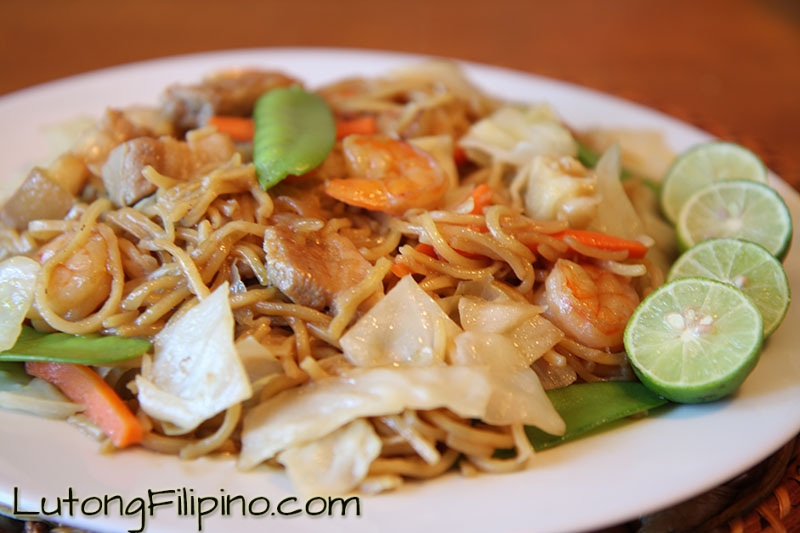
    Do you have an inclination to eat noodle dishes and loving every moment of it? Well, Pancit Canton is a Filipino version of a noodle dish. It is one of the traditional cuisines served not only when there are occasions to celebrate but also during ordinary family gathering.

    From a historical viewpoint, Pancit Canton was introduced by the Chinese and has since then become part of traditional Filipino dishes. There are several types of noodles available in the market today. In fact, it is very common among fine restaurants and even in local restaurants.

    Did you know that Pancit Canton is never absent in birthday occasions? It is because basing on tradition – Pancit Canton can give long life. Apart from this interesting symbolism, it is one of the first delicacies you must taste whether you are just visiting the country or want to cook Filipino dishes on your own.

    The dish make use of several ingredients including pork or chicken meat, shrimp, sausage and vegetables like cabbage. The finished dish is colorful and festive – plus it can give carbohydrate loading.

    You can cook Pancit Canton at your very own home and serve it during ordinary meal time or on afternoon picnic or snacks. When it comes to this dish, the sky is the limit to the ingredients you can add. Some people even sprinkle powdered pepper to add some spicy flavor. You can use your imagination on what you would like to add – especially ones that will effectively enhance the dish.

    So, the next time you want to cook something delicious and can give you a carbohydrate load, try Pancit Canton – you won’t regret that you did.

    [yumprint-recipe id=’4′]
  • Chop Suey

    Chop Suey

    Craving for a vegetable dish? Or are you looking for a nutritious, cheap, easy to prepare and of course delicious food? Then look no further, because here’s a dish that would surely satisfy your hunger and makes you wanting for more. It’s Chop suey.

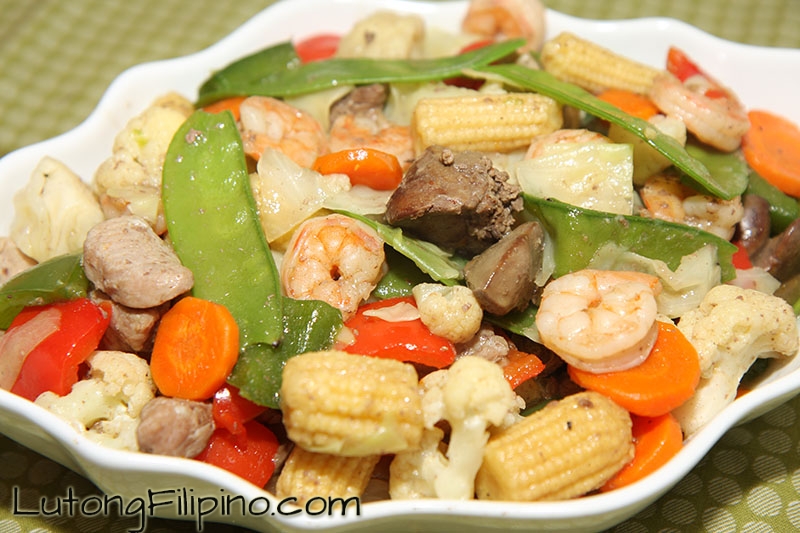
    Chop suey literally “assorted pieces” in traditional Chinese is a dish that becomes a prominent part of American Chinese, Filipino and other Asian cuisine. It is a mixture of meat (pork, chicken, beef or shrimps) and shredded vegetables such as cabbage, carrots, cauliflower, broccoli and bell peppers bound in a starch-thickened sauce. Others even added mushrooms and quail eggs, mixing all the flavors together. It is even labeled as a “savory mess” according to one translation.

    It is commonly believed that this dish is invented by Chinese Americans, however anthropologist E.N. Anderson conclude that it originates from a Chinese cuisine known as “tsap seui” (miscellaneous leftovers), which was first prepared from various leftovers. It had its roots in Toisan, a county in Guangdong Province, where many of the early Chinese immigrants to the US came from. Vegetable farmers from Toisan would stir-fry the thinning and shoots of unsold vegetable approximately ten varieties of vegetables in a dish. Nevertheless, a long list of often conflicting stories on the origin of this dish would emerge and according to the words of a food historian, Alan Davidson, it is typical of popular foods and “a prime example of culinary mythology.”

    It has been one of the main dishes of Filipino homes because of its cost-effective, easiness in preparation and nutritive value. It is high in calories and fat that would satisfy one’s satiety and provide the body with much needed nutrients. However, despite of its high caloric level, this dish can be altered like using chicken instead of pork, adding more vegetables and using less oil. That is why it is perfect as a light meal or even as a diet.

    [yumprint-recipe id=’8′]

  • Turon

    Turon

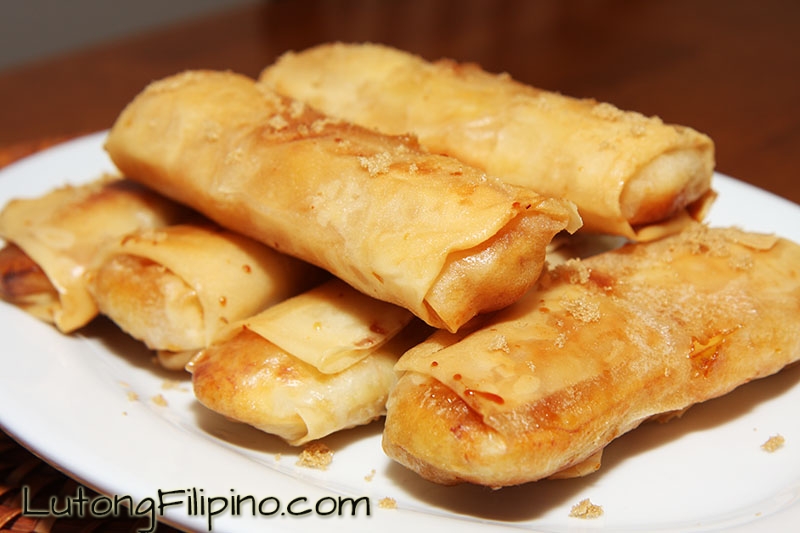
    If you are in search for a delicious Filipino dessert, Turon (otherwise known as Sweet Banana Rolls) would be one of the foods that you must try. The wrapper used in this dessert is similar to the ones used in making Lumpia. Did you know that “turon” comes from “Turron de Banana,” which is a Spanish word?

    Yes, this delicious dessert in the Philippines is not only a food but one with an interesting historical background, as well.

    The best ingredient to use is “saba.” It is prepared on spring roll wrappers before it will be deeply fried along with sugar glaze. There are a variety of filling that you can add as palatable ingredient including – cheddar cheese, coconut, sweet potato, mango and even “ube.”

    Philippine streets would not be complete with “turon” as one of the street food snacks that people can indulge into. It is sometimes sold with camote cue and banana cue. In many homes, it is also served as dessert after a meal or can be brought to a picnic as snack.

    In many instances, “turon” is flavored with jackfruit to give it an authentic taste and aroma that would make it hard to resist. It is best to eat this delicacy after freshly cooked so that you can savor its taste. However, the sugar glaze can preserve its crispiness so you can still enjoy the food long after it has been cooked.

    But be careful – the filling of “turon” could be hot so you might want to wait out until it has cooled down a bit before basking on the glory of eating this heavenly dessert.

    [yumprint-recipe id=’3′]

  • Ginataang Bilo Bilo

    Ginataang Bilo Bilo

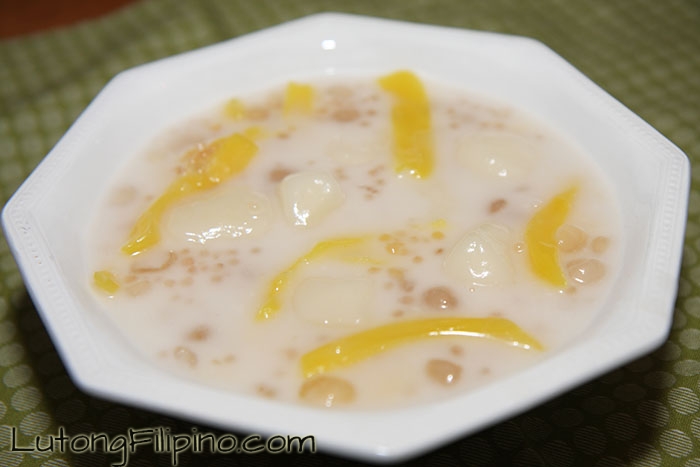
    Ginataang Bilo Bilo is a famous Filipino dish from all over the Philippines. This soft, chewy bilo bilo – or sticky rice is usually served in the afternoon as a delicious snack and is loved by all Filipinos – both the young and young at heart.

    It is best eaten freshly cooked and warm while bilo bilo is still at its best – pillow soft and tasty. It is a sweet snack, which is added with Gata or coconut milk along with other ingredients such as saging na saba or Cardava banana, sago or Tapioca pearls, bilo bilo or sticky glutinous rice balls and langka or jackfruit. However, there are recipes that does not include jackfruit as part of the ingredients. It depends on how you wanted the flavor for the dish.

    Ginataang bilo bilo is a snack that is similar to ginataang halo-halo, which is otherwise known as binignit – only this time it is a simplified version.

    It is fairly easy to prepare ginataang bilo bilo and to cook it as long as you have the ingredients ready. The process is easy to understand and will only require a little time for boiling, stirring and mixing – other than that there is really nothing too complex that anyone cannot do. Once the process is done, you would have your tasty and delicious Filipino snack soon enough.

    But, a word of caution: be careful when you’re eating it especially once it is off the cooking fire. It may look like it has already cooled off but actually it is still too hot for your mouth to handle.

    Nonetheless, this delicious snack is an all-time favorite from all regions in the archipelago.

    [yumprint-recipe id=’16’] 

  • Lechon Kawali

    Lechon Kawali

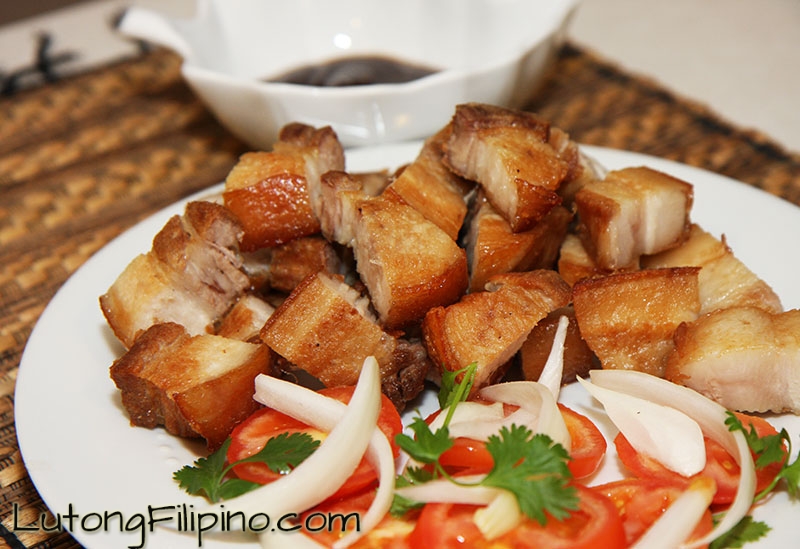
    Lechon Kawali is one of the many Spanish-influenced and top dishes in the Philippines. It is a simpler and easier to prepare version of the common lechon because it takes only a small amount of preparation and time to cook the dish. It can even be cooked without using a pit. This means that you don’t need professional assistance or the need to use any specialized cooking technology.

    It has a relatively interesting history, which originated from the Tagalogs although it was also introduced by the Spaniards during their colony. It is similar to the popular Ilocano dish – Bagnet only that the latter crackles, dry and is light. It may also have originated in Bulacan, where deep frying pork bellies is popular.

    Nonetheless, if you want a delicious partner to steamed rice or even the famous java rice, lechon kawali is one of the best dishes that can go along with it. With this combination, you can now enjoy a full meal – especially on your “cheat days” when you can eat whatever you want!

    You can use pork belly as a primary ingredient for the dish. You can use kawali – which is a Filipino variant of wok or frying pan used for deep frying. Hence, the name “lechon kawali.”

    After cooking, you can prepare a sauce made of the mixture between soy sauce and vinegar or calamansi (lemon).

    So, look no further if you are looking out to cook or taste one of the best dishes you can find in the Philippines. But, there is no need to fly over just to taste this delicious dish. Because, you can cook it in your very own home.

    [yumprint-recipe id=’14’]

  • Guisadong Pusit

    Guisadong Pusit

    The Philippines is a country set close to the Pacific Ocean and is brimming full of islands and seas. With it, comes the advent of exotic and exciting Filipino seafood dishes. So if you happen to have an inclination for sea foods then this should be the right dish to start.

    It happened that among the various delectable seafood dishes out there, squid is one of the most popular seafood ingredients you can find at any Chinese cuisine or seafood restaurant.

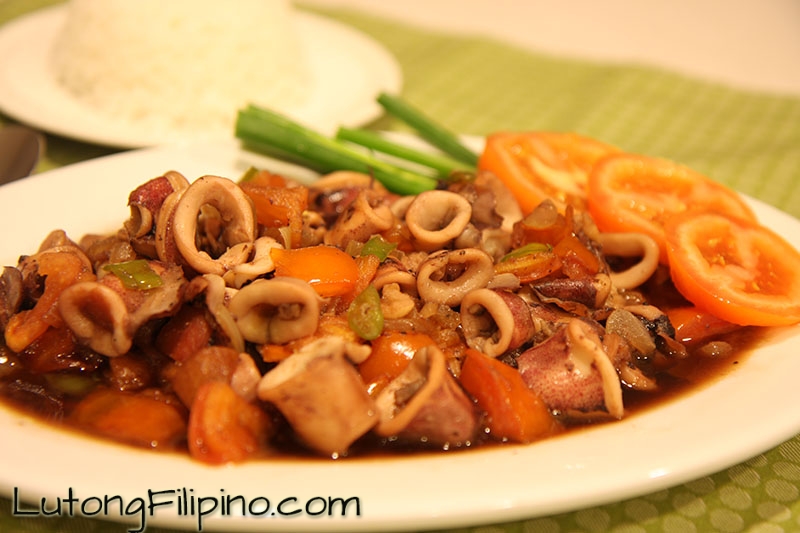
    Among the myriad ways to cook this seafood delicacy is the simple, easy-to-cook yet delicious, the Sautéed Squid recipe or as the locals call it, the “Guisadong pusit”.

    “Guisadong pusit” is a recipe well known throughout the “baranggays” or communities. You can ask and expect the designated cook in any household of a “baranggay” to cook this recipe and you will not go disappointed. The dish is commonplace such as the likes of the adobo, ginisa, and other home-cooking recipes.

    The dish is usually cooked and presented with the squid cut into rings and prepared with crushed garlic, chopped onion, a spoonful of fish sauce or soy sauce, black pepper and sometimes, may even be served with chili pepper. Not only does the dish offer a delicious and exciting treat, it also is an excellent source of protein.

    It is important to note when you are cooking squid to not to overcook it as it not only toughens, but it would also lose its flavor and its texture as well. It is best served hot with steamed rice as a side dish.

    [yumprint-recipe id=’10’]