Month: January 2015

  • Sarciadong Galunggong

    Sarciadong Galunggong

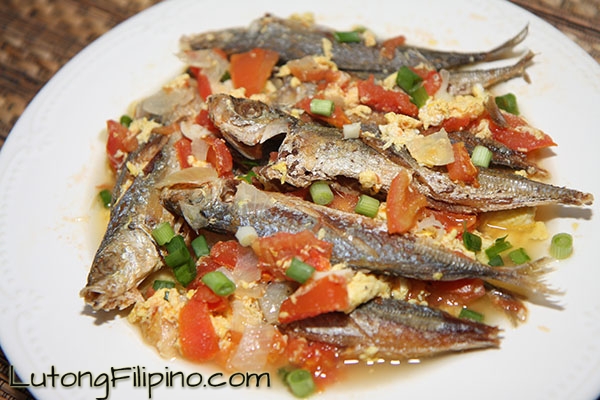
    Sarciadong galunggong is another one easy and simple Filipino dish that you can prepare and cook. It is interesting to note that it is a good way for you to re-cook any left-over fish – galunggong in this case – you may have from the previous meal. In fact, it will taste and look differently – like any brand-new cooked dish you can eat. Sarciadong galunggong is simmered in sauce that usually has various spices such as tomatoes and onions with the addition of beaten eggs. You can also add seasonings to the mixture to further augment the flavor and make it even tastier.

    With that said, sarciadong galunggong can be your left-over galunggong fish dish and no one needs to know otherwise of course if they are familiar with the recipe. Nonetheless, it gives the fish its unique taste and blend that you cannot otherwise attain.

    Basically, all you need is the fried galunggong (may be left over), sautéed tomato, garlic and onion then add the beaten egg on top and you are already done preparing.

    You can have other spices that you’d like to add according to your preferences but you should always remember to have the beaten egg added last and should not be stirred. Otherwise, the egg will break down and would appear not very appealing. Regardless of your preferred spices, the taste of sarciadong galunggong would suffice to give make you want for more.

    This dish is after all really appetizing and you might want to experiment on the fishes that you’d want to use. This time, however, you are introduced to galunggong as its main ingredient.

    [yumprint-recipe id=’25’]
  • Kare Kare Pata ng Baboy

    Kare Kare Pata ng Baboy

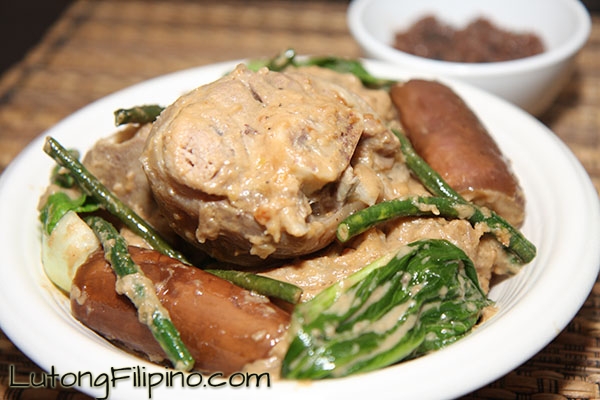
    Pata ng baboy kare-kare is just one of the several ingredients you can use in pork kare-kare. In this dish, you use pork shank or the pig’s leg – known locally as pata. Then, you add some veggies to complete the tasty equation and you’re ready to go.

    In this dish, the sauce is thick and chunky as you can notice especially when the recipe is already added with your most preferred veggies. The sauce in kare-kare is made from peanut butter and you can add more crushed peanuts if you wish. This adds more twist and life to your recipe, if that is what you’re after.

    Nonetheless, the dish is already appealing on its own – making your mouth water with desire. It is fairly easy to prepare and cook the kare-kare pata ng baboy. It can be quite hard to wait for the meat to tenderize but it pays off once you get to taste the juicy tender meat once it is all done. If you don’t want to wait, you can use a pressure cooker to make the meat go tender fast.

    Kare-kare is best served with white steamed rice but you can use other complimentary dishes if you wish. This is one of the popular dishes that you can find in many tables in the Philippines during fiestas and other festivities.

    Just to add some spice, here’s a brief historical background of kare-kare pata ng baboy:

    Originally, this dish comes from a traditional Indian curry, which locally became known as “kari.” The Filipinos then made simple twists to the recipe and added local ingredients. This is how the evolution of kare-kare in the Philippines goes. Isn’t it interesting to be able to cook this wonderful dish?

    [yumprint-recipe id=’24’]

  • Buko Salad

    Buko Salad

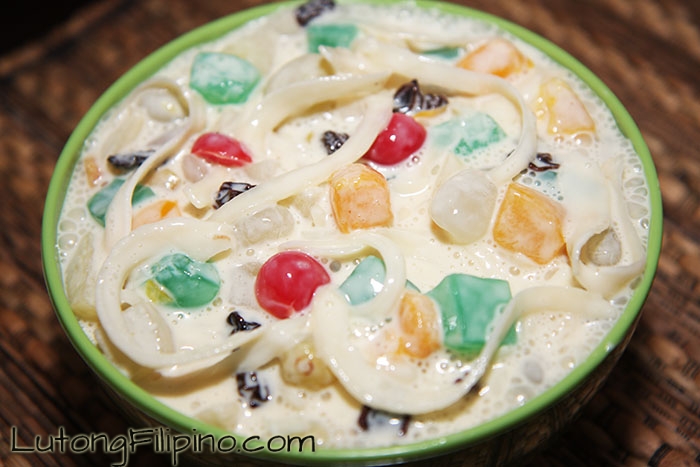
    Every household in the Philippines has their own way of preparing buko salad – a delicious concoction for dessert. In most cases, it is prepared with canned fruits, cream, sweetened milk and young coconut (shredded) to complete the equation. However, you can also add other ingredients such as kernels and cubed cheese. The ingredients actually just depend on your preferences and it will still taste overwhelmingly delicious.

    If you are the type who just loves sweets, you should try buko salad and be captivated by this delicious dessert with shredded young coconut as its primary ingredient. It is one of the desserts you can find in many special occasions in the Philippines and common served during fiestas, holidays and birthday parties.

    This dessert is very simple and easy to prepare. You only have to combine the different ingredients and add the cream and sweetened milk and you’re done. It is best served when it has already stayed in the fridge to cool it up before serving.

    You can actually experiment on the ingredients that you want to add just as long as it will still result to practically the same dessert preparation.

    This dessert is very versatile in the sense that you can get to add what you think would make the taste more delicious and mouth-watering. So, if you are inclined to love sweets but do not want the common cakes, cookies and other desserts, you might want to try preparing buko salad for the family, friends and visitors and impress them without too much effort in the process.

    [yumprint-recipe id=’23’]

  • Nilagang Pata ng Baboy

    Nilagang Pata ng Baboy

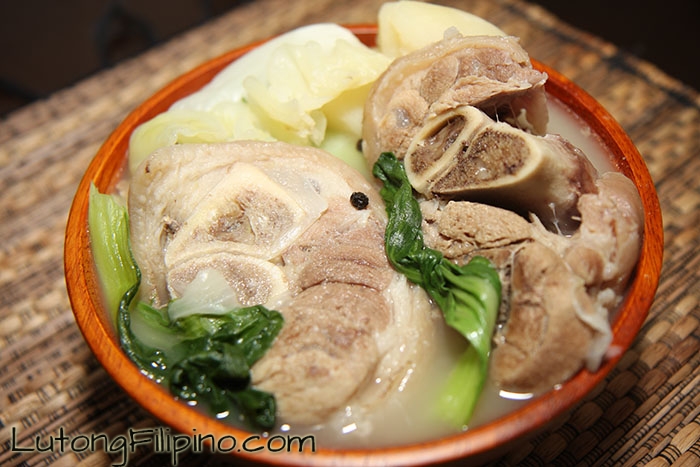
    If you have been cooking Filipino dishes for a while, surely you’ve come across nilagang pata. This simple yet satisfying Filipino dish is one of the popular viands in the Philippines. It is a traditional dish that you can commonly encounter in many homes for lunch and even in small restaurants. It is cooked using pata (pork meat) with the addition of vegetables according to your preferences.

    If you want to taste a unique blend of pork meat soup with its spices and vegetables then nilagang pata ng baboy is one of the recommended dishes that you should try. Whether you’re learning how to cook Filipino dishes or visiting the country and would want to know which dishes are appetizing especially during lunch and cold season, nilagang pata ng baboy is just the recipe for you.

    It can be served for lunch and dinner on ordinary days so you don’t have to limit yourself with the appropriate time on when to serve the dish. It is served best with steamed rice and you can use fish sauce or commonly known locally as patis as well as siling labuyo or bird’s eye chili as its dip.

    Preparing the nilagang pata ng baboy is basically the same as when you’re cooking other meat soup in the Philippines. In fact, it is one of the easiest to prepare and cook and serve it in no time to your family, friends and visitors who are around during lunch or dinner. Do you cook to impress? Nilagang pata ng baboy is a simple dish but impressive in its way as well.

    With the right pork meat texture and enough time, the taste would be overwhelming even to the seasoned chef. All you have to do is choose a good set of spices and vegetable and you’re good to go.

    [yumprint-recipe id=’22’]

  • Palitaw

    Palitaw

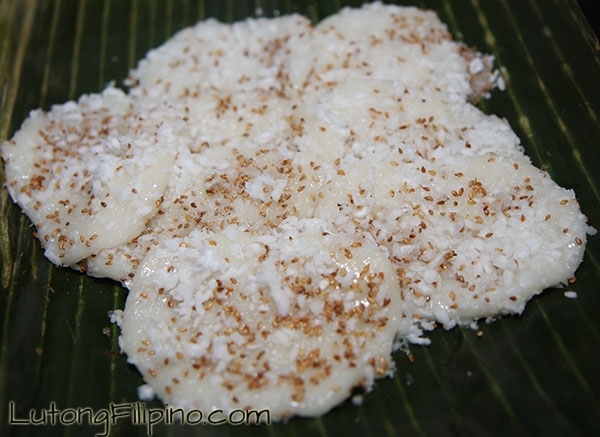
    Palitaw is one of the most delectable deserts in the Philippines. It appears to be small, flat and tastes sweet – sometimes called rice cake serve as desert in Philippine restaurants and in many homes. It can be made from malagkit (sticky rice) washed, soaked and grounded.

    It sure does have a weird name but this should not make you undermine its rich flavorful taste. It is very easy to prepare and you only have to scoop carefully before dropping it to boiling water. When it floats towards the surface, this only means that it is already cooked and done.

    It is best served when it has cooled down a little bit. You can have it as snacks or just an add-on to your healthy meal as desert. It is served with grated coconut and you can also prepare a separate dip that may be made of brown sugar or another version of it – the muscovado sugar then add toasted sesame seeds for complete presentation.

    Locally, palitaw is under the category of kakanin or rice deserts (cake). Before, it is prepared using grounded or pounded malagkit or sticky rice. But today – with the advent of packaged rice flour, the preparation of palitaw has been made easier and more efficient.

    All you have to do is combine rice flour and water and mix them until you form a dough. Once the dough step is completed, you can now divide it into smaller pieces, which you well flatten and dropped to boiling water – as previously mentioned. It sounds pretty easy and it can be done really easy as well. Its name is so because litaw means – to float or on the surface.

    For people who want desert but doesn’t want the usual sweetness of cakes and the likes, palitaw would be a great change of preference.

    [yumprint-recipe id=’21’]

  • Nilagang Baboy

    Nilagang Baboy

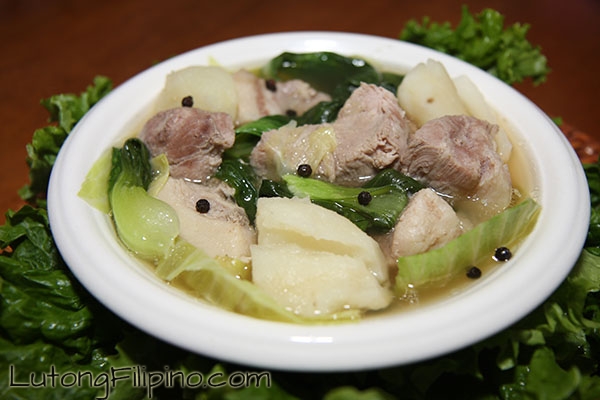
    Among the simplest dishes available in the country, Nilagang Baboy is perhaps one of the easiest to prepare yet you can never undermine its pleasant taste. Underestimating what it does to your taste buds will only cause you to miss its very essence.

    The only thing you need to do is boil a pot of water, prepare the vegetables and other spices of your preferences and voila! You already have nilagang baboy. This may sound so bland and too direct but even so, as mentioned, you should not underestimate its luscious taste – not to mention the very essence of why you use baboy (pork) as meat. For some, especially those whose cultures would not allow the use of such meat may use a different set of preparation but still using the same process or method and arrive at a unique taste of nilaga.

    Nonetheless, in this case, you are using pork meat as the main ingredient. There is no hard and fast rule on what vegetable or spice you want to add to the preparation. However, the most basic ingredient you can find includes onion, peppercorn, potato and cabbage. You can experiment on other ingredients if you prefer but the classic nilagang baboy would have these basic ingredients.

    This type of soup is usually served during lunch and even during dinner on regular holidays. It is best serve hot and with dipping the meat on patis (fish sauce) with siling labuyo (bird’s eye chili).

    If you are looking for Filipino soup to complete your dining experience then nilagang baboy would do the trick!

    [yumprint-recipe id=’18’]