Category: Dessert Recipes

  • Egg Pie

    Egg Pie

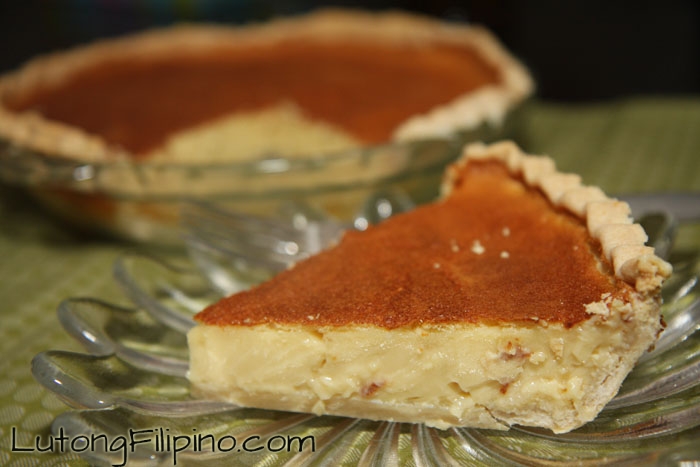
    Egg pie is a sweet indulgence from the roots of Philippines and is a classic favorite in the Filipino local markets. A crunchy buttery crust compliments the soft and smooth texture giving the taste buds full satisfaction. The pie has rich custard filling which when baked gives a nice brown color on the top making the pie irresistible in sight and the aroma attracts the thrill of the first bite.  The ingredient which makes a delicious classic Egg Pie involves different preparations for the crust and the filling.

    To make a flaky light golden brown crust, plain flour along with salt, unsalted butter and cold water at the right quantity would give a consistent crispiness. Obviously, being an Egg Pie, Egg is the main ingredient and comes in play in forming a perfect filling. Evaporated Milk is used to give a right sweetness to the pie balancing with the bind of egg yolks, egg white and a whole egg for the ideal lightness to the filling. To give an extra oomph, a scent of vanilla finishes the heavenly flavor to the pie. After having some bold fusion flavors of the Filipino cuisine, the Egg Pie would be a wonderful finish to the meal. The perfect combination of its silky and crusty texture gives a comforting and mellow tone.

    [yumprint-recipe id=’35’]
  • Pan de Coco

    Pan de Coco

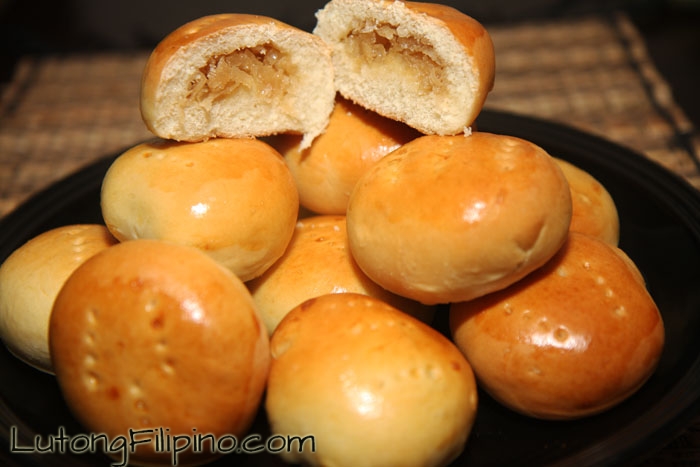
    Pan de Coco or simply coconut bread is a slightly sweet, coconut enriched buns complimenting various meals. Originally from Spain, the rich buns are now the oldest running breads in the Filipino bakery platter. The coconut buns are found all over the bakeries in Philippines and have become an absolute favorite. These soft buns are a must have with the morning milk, teas or coffees but also are served with Caribbean themed meals comprising of beans, rice or even fresh fish. Thus, Pan de Coco fulfils the needs of a snack as well as a desert. The buns are soft sweet rolls from the outside and have a blissful coconut filling form the inside. 

    The buns are fluffy and light in surface due to its precise dough preparation consisting of flour, warm milk and water, instant yeast, eggs along with a good balance of sugar and butter. If not carefully timed and watched, these buns might get under or overcooked due to its runny dough. While the dough rests before bake, a mouth-watering filling can be processed this includes coconut flakes, brown sugar preferably and butter. Each piece of bun is constant in its look and flavor. Now, the buns can be cooked traditionally or with help of a mixer. A slight sprinkle of butter or egg wash on the top of the buns will give a shine and beautiful light brown color soothing to the eyes.

    [yumprint-recipe id=’36’]

  • Yema Cake

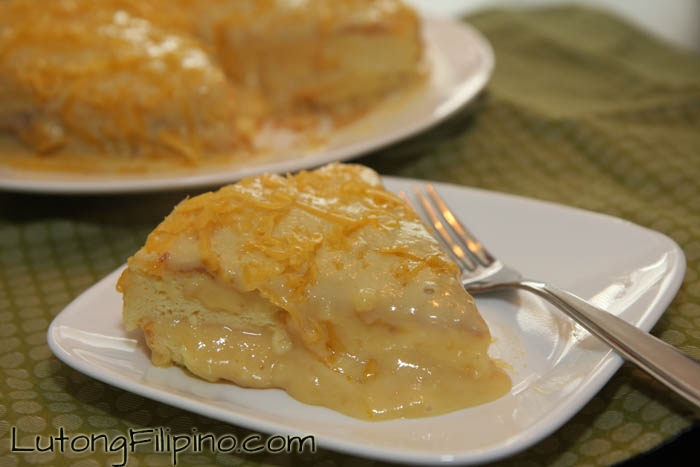
    Yema Cake

    [yumprint-recipe id=’33’]

  • Spanish Bread

    Spanish Bread

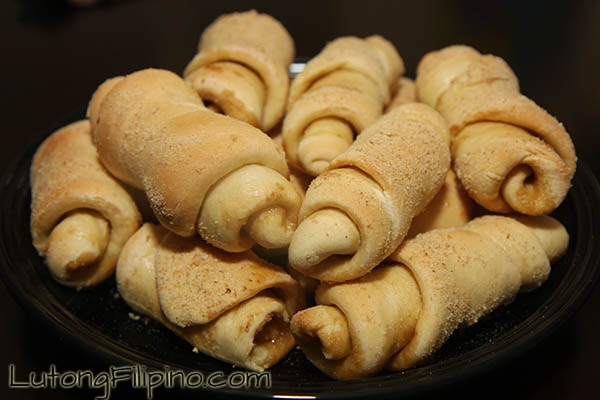
    In the Philippines, the type of bread known as Spanish bread, which is a moist and soft bread filled with margarine and sugar, is one such dish as it has nothing to do with the Spanish cuisine. The bread is a Filipino breakfast staple food whose making is similar to that of cinnamon and is just as popular as ensyamada, Pan De Coco and Pandesal. Apart from breakfasts, the bread is also popular during tea time or marienda and is normally served accompanied by milk or tea. Being a popular breakfast and tea time delicacy, this bread can be got from any bakery in the Philippines.

    Brown sugar, eggs, margarine, breadcrumbs, milk and water are some of the common ingredients used in the making of the bread. The dough is first flattened then the fillings applied on the surface of the dough. The dough is then rolled. The resulting stout like stick has a close resemblance to the Mexican bigote, which is essentially moustache shaped dough. The rolled dough is then baked to yield the sweet tasting Spanish bread. The bread comes in a variety of colors from white to yellow as well as types. However, the procedure for making the bread is the same regardless of the type. This sweet tasting bread is the ideal accompaniment to any drink from coffee, milk to soft drinks such as soda. The sweet taste of the bread also means that it does not require any kind of spreads.

    [yumprint-recipe id=’32’]

  • Macaroons

    Macaroons

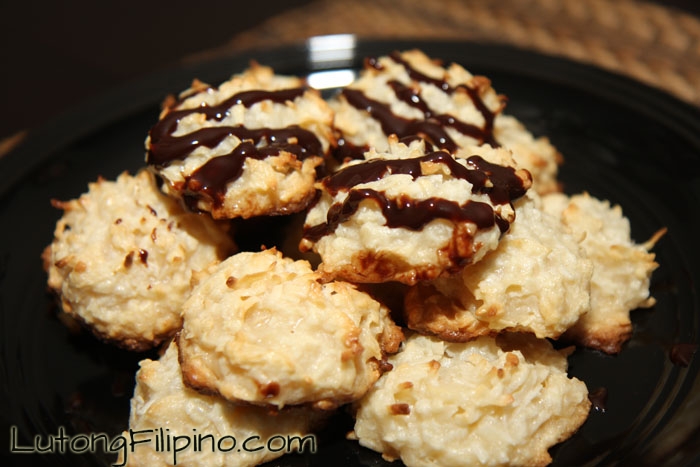
    A dessert that is rich in historical background – that is Macaroons the Filipino version. The word macaroon is actually a term that is used to refer to any lightly baked confection – usually as small cakes or cookies. The Filipino version is a different kind in that it uses coconut as its main ingredients but there are other ingredients that you can use as well, such as almonds and meringue itself.

    Just a brief history – macaroon is an Italian term “maccherone or maccarone,” which comes from the term ammaccare that means crush or beat. However, this refers to the version that uses almond paste as its primary ingredient from the original macaroon recipe.

    Despite having several variations of this same dessert, macaroons of all types contain eggs and sugar as its common denominator.

    Comparing it to its French counterpart, the Filipino version is a lot easier to prepare. In fact, it is considered as the easiest dessert ever made in the Philippines. Not all households will prepare macaroons as part of dessert in fiestas, special occasions and holidays but when they do it is usually tasty and really delicious along with coffee, cold drinks and even tea.

    Given the little time it needs to prepare and the light baking that’s needed, you can easily serve this when you’re expecting a visitor or you will have a small family gathering. If this is something that you would try out – deviating from the original French preparation of Macaroon then you are most certainly in for a tasty ride for this little coconut cakes bring surprises only you can take.

    [yumprint-recipe id=’26’]

  • Buko Salad

    Buko Salad

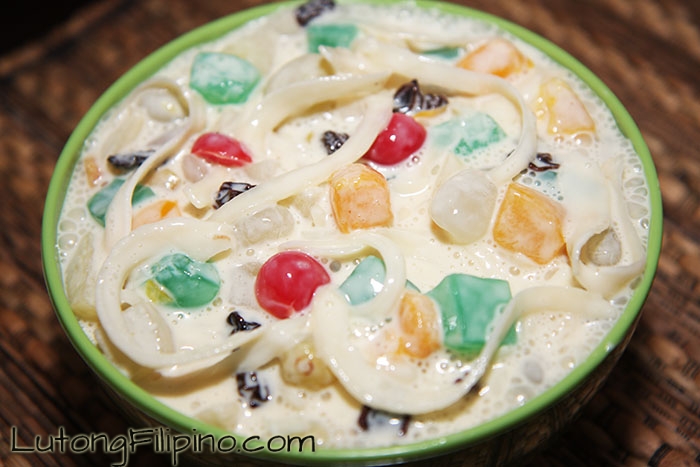
    Every household in the Philippines has their own way of preparing buko salad – a delicious concoction for dessert. In most cases, it is prepared with canned fruits, cream, sweetened milk and young coconut (shredded) to complete the equation. However, you can also add other ingredients such as kernels and cubed cheese. The ingredients actually just depend on your preferences and it will still taste overwhelmingly delicious.

    If you are the type who just loves sweets, you should try buko salad and be captivated by this delicious dessert with shredded young coconut as its primary ingredient. It is one of the desserts you can find in many special occasions in the Philippines and common served during fiestas, holidays and birthday parties.

    This dessert is very simple and easy to prepare. You only have to combine the different ingredients and add the cream and sweetened milk and you’re done. It is best served when it has already stayed in the fridge to cool it up before serving.

    You can actually experiment on the ingredients that you want to add just as long as it will still result to practically the same dessert preparation.

    This dessert is very versatile in the sense that you can get to add what you think would make the taste more delicious and mouth-watering. So, if you are inclined to love sweets but do not want the common cakes, cookies and other desserts, you might want to try preparing buko salad for the family, friends and visitors and impress them without too much effort in the process.

    [yumprint-recipe id=’23’]

  • Palitaw

    Palitaw

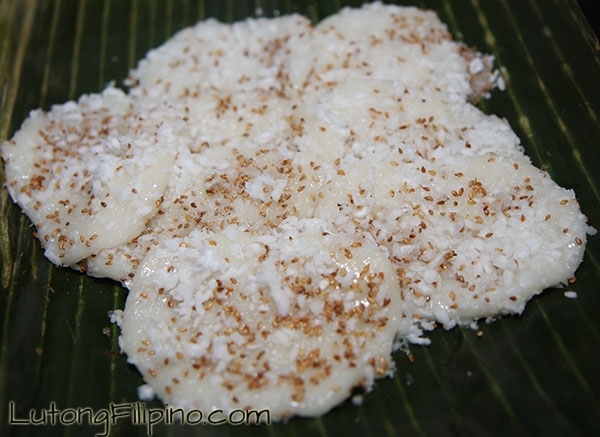
    Palitaw is one of the most delectable deserts in the Philippines. It appears to be small, flat and tastes sweet – sometimes called rice cake serve as desert in Philippine restaurants and in many homes. It can be made from malagkit (sticky rice) washed, soaked and grounded.

    It sure does have a weird name but this should not make you undermine its rich flavorful taste. It is very easy to prepare and you only have to scoop carefully before dropping it to boiling water. When it floats towards the surface, this only means that it is already cooked and done.

    It is best served when it has cooled down a little bit. You can have it as snacks or just an add-on to your healthy meal as desert. It is served with grated coconut and you can also prepare a separate dip that may be made of brown sugar or another version of it – the muscovado sugar then add toasted sesame seeds for complete presentation.

    Locally, palitaw is under the category of kakanin or rice deserts (cake). Before, it is prepared using grounded or pounded malagkit or sticky rice. But today – with the advent of packaged rice flour, the preparation of palitaw has been made easier and more efficient.

    All you have to do is combine rice flour and water and mix them until you form a dough. Once the dough step is completed, you can now divide it into smaller pieces, which you well flatten and dropped to boiling water – as previously mentioned. It sounds pretty easy and it can be done really easy as well. Its name is so because litaw means – to float or on the surface.

    For people who want desert but doesn’t want the usual sweetness of cakes and the likes, palitaw would be a great change of preference.

    [yumprint-recipe id=’21’]

  • Mamon (Filipino Sponge Cake)

    Mamon (Filipino Sponge Cake)

    Philippine cuisine would not be complete without the bread and pastries category. Among the sundry of delectable treats out there, Mamon is considered as one of the popular pastries in the country.

    Mamon is a chiffon-type or sponge cake. Its name actually has its roots from a Spanish term meaning breast. It is also called the Filipino yellow sponge cake.

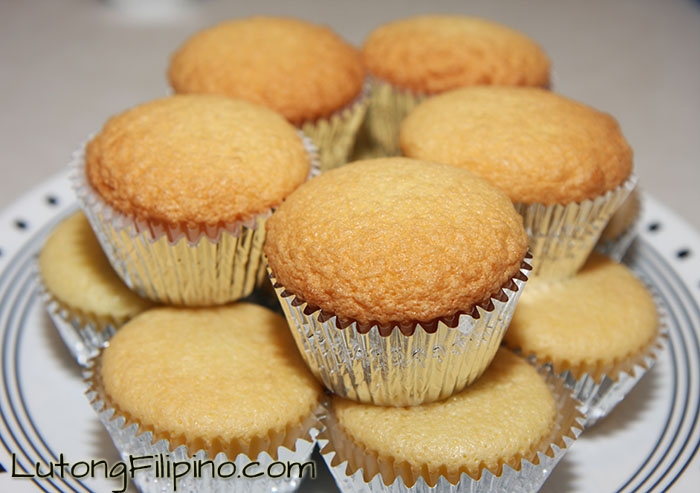
    It is soft, light, usually has a very thin light brown upper crust and with a smooth yellow inner part. It is usually served and packaged, individually, as big as cupcakes or, sometimes, as muffins. It is baked in small molds and are good for just one person per serving. It is famous among the Filipinos for its softness and its distinct creamy taste.

    It can be available as just plain classic, sprinkled with sugar, or with cheese on top. It can come with its own flavor, such as vanilla, chocolate or strawberry. It can also be dished up with fillings or toppings creatively catered by the baker. If it is served with toppings then it is referred to as “Mamon espesyal”, which stands for special Mamon. There are also other variants for this treat such as the “mamoncillo”, and “mamon tostada”, each having their own different style, texture and taste.

    Oftentimes, this lovely little treat can be found at a motley of compact bakeshops sprawling over the country’s “barrios” or small villages besides the more commonly known bakeries. It is a treat that can be easily become a favorite for bread and cake lovers alike.

    [yumprint-recipe id=’9′]

  • Turon

    Turon

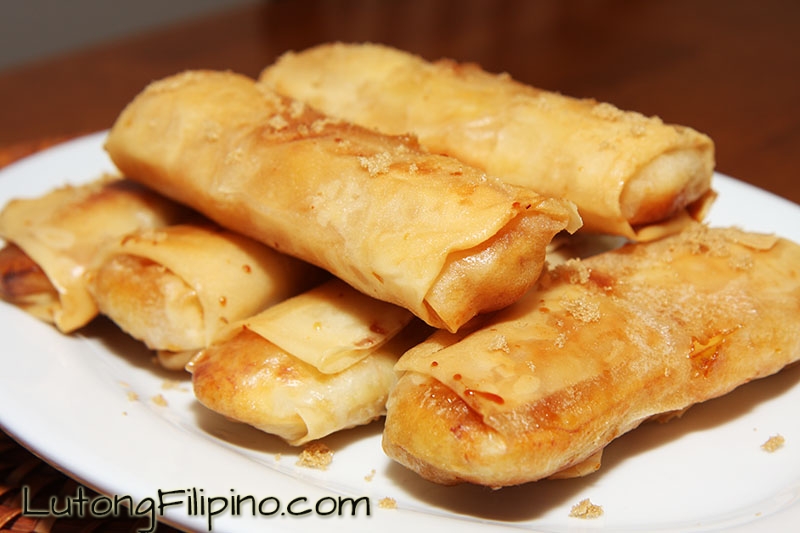
    If you are in search for a delicious Filipino dessert, Turon (otherwise known as Sweet Banana Rolls) would be one of the foods that you must try. The wrapper used in this dessert is similar to the ones used in making Lumpia. Did you know that “turon” comes from “Turron de Banana,” which is a Spanish word?

    Yes, this delicious dessert in the Philippines is not only a food but one with an interesting historical background, as well.

    The best ingredient to use is “saba.” It is prepared on spring roll wrappers before it will be deeply fried along with sugar glaze. There are a variety of filling that you can add as palatable ingredient including – cheddar cheese, coconut, sweet potato, mango and even “ube.”

    Philippine streets would not be complete with “turon” as one of the street food snacks that people can indulge into. It is sometimes sold with camote cue and banana cue. In many homes, it is also served as dessert after a meal or can be brought to a picnic as snack.

    In many instances, “turon” is flavored with jackfruit to give it an authentic taste and aroma that would make it hard to resist. It is best to eat this delicacy after freshly cooked so that you can savor its taste. However, the sugar glaze can preserve its crispiness so you can still enjoy the food long after it has been cooked.

    But be careful – the filling of “turon” could be hot so you might want to wait out until it has cooled down a bit before basking on the glory of eating this heavenly dessert.

    [yumprint-recipe id=’3′]

  • Ginataang Bilo Bilo

    Ginataang Bilo Bilo

    Ginataang Bilo Bilo is a famous Filipino dish from all over the Philippines. This soft, chewy bilo bilo – or sticky rice is usually served in the afternoon as a delicious snack and is loved by all Filipinos – both the young and young at heart.

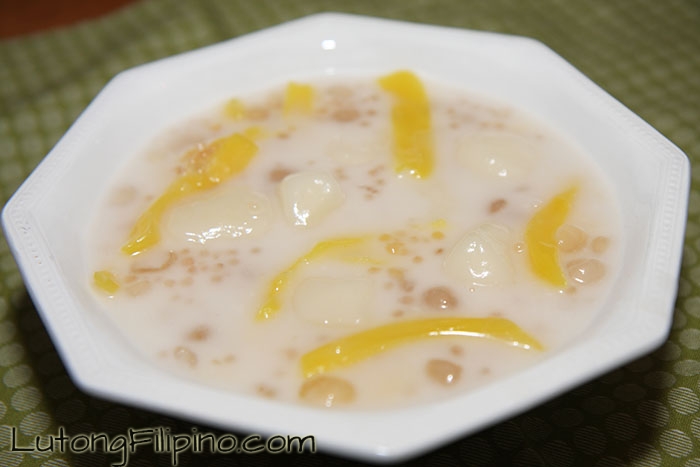
    It is best eaten freshly cooked and warm while bilo bilo is still at its best – pillow soft and tasty. It is a sweet snack, which is added with Gata or coconut milk along with other ingredients such as saging na saba or Cardava banana, sago or Tapioca pearls, bilo bilo or sticky glutinous rice balls and langka or jackfruit. However, there are recipes that does not include jackfruit as part of the ingredients. It depends on how you wanted the flavor for the dish.

    Ginataang bilo bilo is a snack that is similar to ginataang halo-halo, which is otherwise known as binignit – only this time it is a simplified version.

    It is fairly easy to prepare ginataang bilo bilo and to cook it as long as you have the ingredients ready. The process is easy to understand and will only require a little time for boiling, stirring and mixing – other than that there is really nothing too complex that anyone cannot do. Once the process is done, you would have your tasty and delicious Filipino snack soon enough.

    But, a word of caution: be careful when you’re eating it especially once it is off the cooking fire. It may look like it has already cooled off but actually it is still too hot for your mouth to handle.

    Nonetheless, this delicious snack is an all-time favorite from all regions in the archipelago.

    [yumprint-recipe id=’16’]