Category: Pork Recipes

  • Pork Sisig

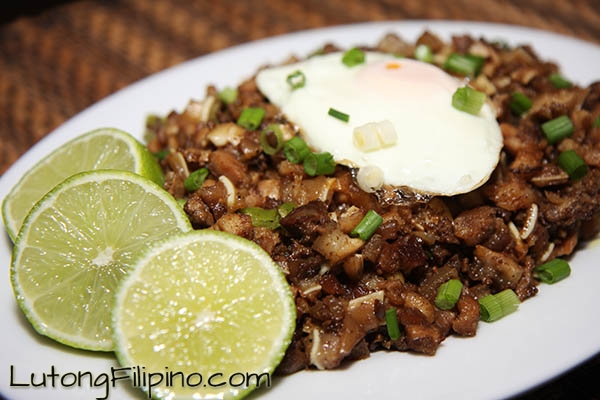
    Pork Sisig

    Sisig translates to “snack on something sour” in Kapampangan. The dish originates from locals who bought pig heads from agents of the Clark Air Base. Pig heads weren’t used to prepare food for the Air Force personnel stationed there. The late Lucinda Cunanan is famously referred to as Aling Lucing-the Sisig Queen for pioneering the dish. Today, Pampanga is championed as being the culinary capital of the Philippines.
    Pork Sisig is now a renowned dish served all over the world. Hundreds of variations have turned the dish into a household favorite. Pork sisig was usually served as an appetizer or a snack before meals. A few more ingredients and you have a full course meal. Add a tortilla or a crunchy shell and you have sisig tacos.

    The process of cooking and preparing sisig takes some time. Furthermore, the history behind sisig and what represents it to Filipino culture is beautifully symbolized on the plate. The time is worth it! A healthier rendition is seafood oriented. Instead of the pork head, a medley of mussels, tuna, milkfish and squid with mayonnaise can be served. Oxbrains, chicken, and tofu are frequently used too. Tofu is an excellent substitute for a vegetarian adaption.

    Pork sisig is popular in bars and restaurants across the Philippines. Many claim that it tastes excellent with a cold beer. Another companion of the savory dish is steamed white rice. Apparently, this not only brightens up the dish, but the flavors are concentrated. The crispy pork skin sizzling with the tender marinated, meat gives off a tangy taste and vivid aroma.

    [yumprint-recipe id=’30’]
  • Ginisang Munggo

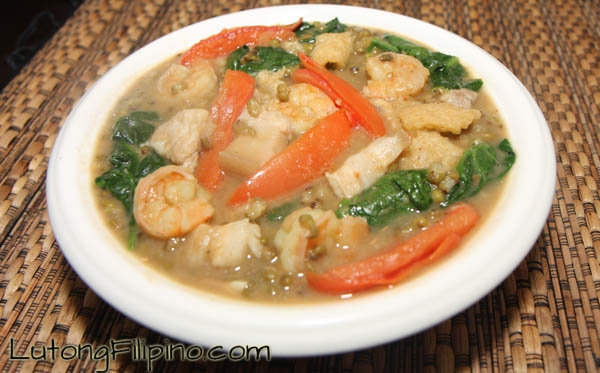
    Ginisang Munggo

    Ginisang Munggo is one of Filipino favorites and it has been among the most common dish you can find in local restaurants or turo-turo. The plant munggo or mung bean (sometimes known as green bean) is native to Pakistan and India, which means it is original to Asia. When the plant reached the Philippines, it was then that it became the sensational ginisang munggo. But even though it is common, its taste can live you wanting for more.

    Apart from ginisang munggo, it can even be used as an ingredient in various desserts. Sautéed mung bean – as its other name – is one of the main dishes served during cold season.

    The mouthwatering taste it offers leave most Filipinos looking forward to the next time they would be able to eat the dish. It is served best with lukewarm rice and it compliments other ingredients as well.

    What’s great is that this dish is very satisfying despite being budget-friendly. The preparation of ginisang munggo is different in various locales as well as the ingredients used along with it. You can even prepare it in a vegan way by getting rid of any meat from the ingredients and use tofu in their place.

    Other times, malunggay or moringa is used as leafy vegetable ingredient considering how nutritious it is. It also offer thickness on the soup, which means you could always have the consistency you desired.

    Regardless of what ingredients you add and how you prepare the entire dish, its popularity among Filipinos is still the same. If you are going to try out a new Filipino dish, ginisang munggo is the right one to choose. It is common and easy but will surely make you feel like you’ve eaten the best.

    [yumprint-recipe id=’27’]

  • Kare Kare Pata ng Baboy

    Kare Kare Pata ng Baboy

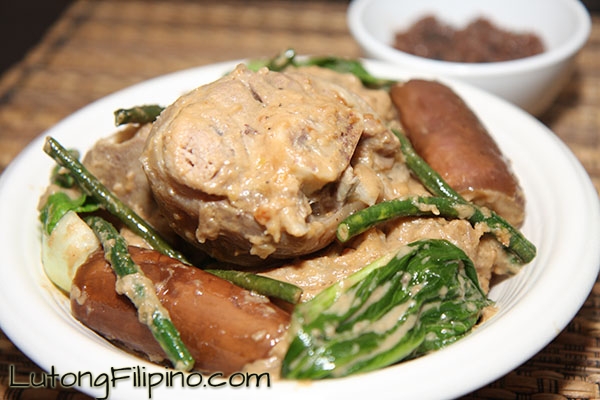
    Pata ng baboy kare-kare is just one of the several ingredients you can use in pork kare-kare. In this dish, you use pork shank or the pig’s leg – known locally as pata. Then, you add some veggies to complete the tasty equation and you’re ready to go.

    In this dish, the sauce is thick and chunky as you can notice especially when the recipe is already added with your most preferred veggies. The sauce in kare-kare is made from peanut butter and you can add more crushed peanuts if you wish. This adds more twist and life to your recipe, if that is what you’re after.

    Nonetheless, the dish is already appealing on its own – making your mouth water with desire. It is fairly easy to prepare and cook the kare-kare pata ng baboy. It can be quite hard to wait for the meat to tenderize but it pays off once you get to taste the juicy tender meat once it is all done. If you don’t want to wait, you can use a pressure cooker to make the meat go tender fast.

    Kare-kare is best served with white steamed rice but you can use other complimentary dishes if you wish. This is one of the popular dishes that you can find in many tables in the Philippines during fiestas and other festivities.

    Just to add some spice, here’s a brief historical background of kare-kare pata ng baboy:

    Originally, this dish comes from a traditional Indian curry, which locally became known as “kari.” The Filipinos then made simple twists to the recipe and added local ingredients. This is how the evolution of kare-kare in the Philippines goes. Isn’t it interesting to be able to cook this wonderful dish?

    [yumprint-recipe id=’24’]

  • Nilagang Pata ng Baboy

    Nilagang Pata ng Baboy

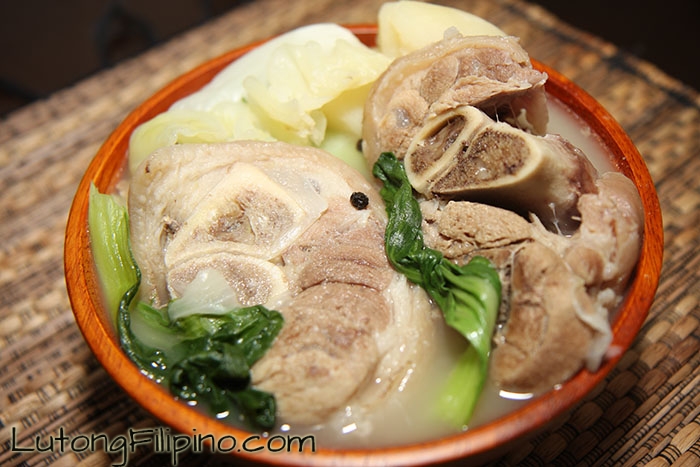
    If you have been cooking Filipino dishes for a while, surely you’ve come across nilagang pata. This simple yet satisfying Filipino dish is one of the popular viands in the Philippines. It is a traditional dish that you can commonly encounter in many homes for lunch and even in small restaurants. It is cooked using pata (pork meat) with the addition of vegetables according to your preferences.

    If you want to taste a unique blend of pork meat soup with its spices and vegetables then nilagang pata ng baboy is one of the recommended dishes that you should try. Whether you’re learning how to cook Filipino dishes or visiting the country and would want to know which dishes are appetizing especially during lunch and cold season, nilagang pata ng baboy is just the recipe for you.

    It can be served for lunch and dinner on ordinary days so you don’t have to limit yourself with the appropriate time on when to serve the dish. It is served best with steamed rice and you can use fish sauce or commonly known locally as patis as well as siling labuyo or bird’s eye chili as its dip.

    Preparing the nilagang pata ng baboy is basically the same as when you’re cooking other meat soup in the Philippines. In fact, it is one of the easiest to prepare and cook and serve it in no time to your family, friends and visitors who are around during lunch or dinner. Do you cook to impress? Nilagang pata ng baboy is a simple dish but impressive in its way as well.

    With the right pork meat texture and enough time, the taste would be overwhelming even to the seasoned chef. All you have to do is choose a good set of spices and vegetable and you’re good to go.

    [yumprint-recipe id=’22’]

  • Nilagang Baboy

    Nilagang Baboy

    Among the simplest dishes available in the country, Nilagang Baboy is perhaps one of the easiest to prepare yet you can never undermine its pleasant taste. Underestimating what it does to your taste buds will only cause you to miss its very essence.

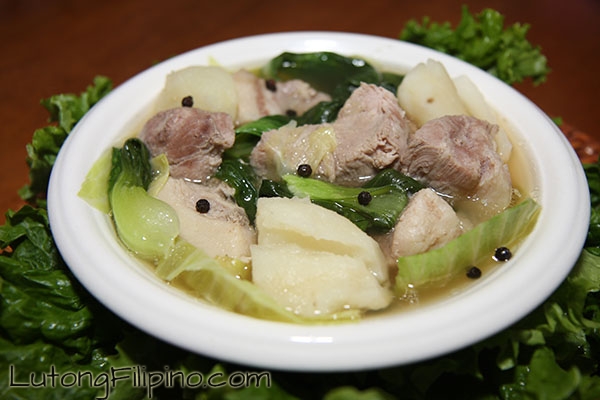
    The only thing you need to do is boil a pot of water, prepare the vegetables and other spices of your preferences and voila! You already have nilagang baboy. This may sound so bland and too direct but even so, as mentioned, you should not underestimate its luscious taste – not to mention the very essence of why you use baboy (pork) as meat. For some, especially those whose cultures would not allow the use of such meat may use a different set of preparation but still using the same process or method and arrive at a unique taste of nilaga.

    Nonetheless, in this case, you are using pork meat as the main ingredient. There is no hard and fast rule on what vegetable or spice you want to add to the preparation. However, the most basic ingredient you can find includes onion, peppercorn, potato and cabbage. You can experiment on other ingredients if you prefer but the classic nilagang baboy would have these basic ingredients.

    This type of soup is usually served during lunch and even during dinner on regular holidays. It is best serve hot and with dipping the meat on patis (fish sauce) with siling labuyo (bird’s eye chili).

    If you are looking for Filipino soup to complete your dining experience then nilagang baboy would do the trick!

    [yumprint-recipe id=’18’]

  • Menudo

    Menudo

    If you are looking for Filipino comfort food then Menudo should be on top of your list. There are a lot of people in the Philippines who cannot last a month without preparing and cooking the dish at least once. Sounds familiar? Cook one now!

    Nonetheless, the dish is pretty easy to prepare and cook despite the absence of experience. There are still others who would get addicted to the dish, which would likely become their obsession. The dish is often served during special occasions such as fiestas and rare gatherings of family and friends. However, there is no need for you to wait for a special occasion or feast in order to prepare and cook one.

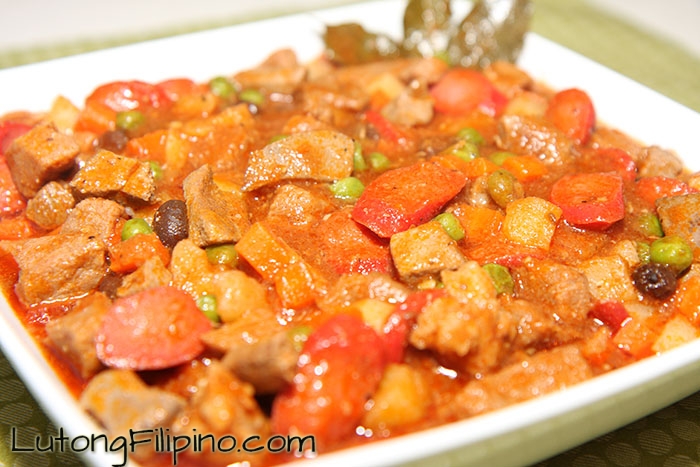
    The process is simple and the ingredients are relatively easy to acquire. There are also different variations of this dish but we will be focusing on pork menudo this time. The different variations are just proof that this is one of the favorite dishes. Other menudo recipes would include hotdogs, peas, dried raisins and some others depending on your preferences.

    One great advantage of menudo is that you can try out other ingredients along with its primary ingredients. In most cases, this is regional – where other locations would have different ideas when it comes to ingredients. However, different variations do not mean one is better or one would taste totally different from the other. It just represents the preferred taste in one province.

    Menudo has the same name with the Mexican dish – only it is not prepared with tripe but instead with liver and pork slices.

    [yumprint-recipe id=’15’]

  • Pork Adobo

    Pork Adobo

    When it comes to cooking and food in the Philippines, the Filipinos are well-known for a signature recipe that permeates through every household and barrios in the whole country. This recipe involves two words: Pork and Adobo.

    Pork Adobo, or as the locals call it “Adobong Baboy”, is an all-time favorite Filipino dish that is cherished, beloved and can be enjoyed by anyone. The word “Adobo” is a Spanish word which signifies a special type of cooking. It basically involves the meat being marinated in herbs or spices and then stewed. The Filipino Adobo is different from its Spanish counterpart in that the Spanish Adobo involves paprika, oregano, salt, garlic, and vinegar.

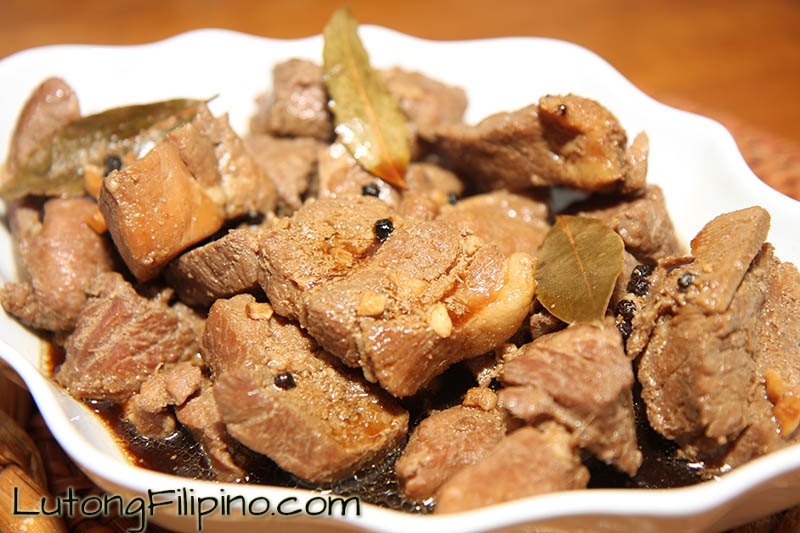
    The dish is usually cooked and prepared with the meat (pork) marinated in soy sauce, garlic and vinegar. It is then boiled or browned in oil and then simmered in its marinade. You can have variations in your cooking as you can put or add ingredients such as bay leaves, peppercorns, and other seasonings of your choice.

    The fun thing about the dish is that you don’t have to be exact and specific for the recipe to be perfect. As long as you have the basic ingredients and the right method of cooking, you can create your own customized and style of adobo that fits your taste. It is best served hot with steamed rice.

    The Filipino pork adobo is a dish enjoyed by foreigners and locals alike as one of their favorite Filipino common household dishes and the locals pride it as a dish unique to the Philippine culture.

    [yumprint-recipe id=’13’]

  • Pork Sinigang

    Pork Sinigang

    Pork Sinigang is a native cuisine in the Philippines – particularly known for its sour taste. If you want to taste one famous cuisine among locals then this must be one of the first cuisines you must try. 

    Traditionally, sinigang is tamarind-based but calamansi, unripe mango, guava and bilimbi may also be used as souring agent. There are also seasoning powder available in the market that may be used as an alternative if natural sources prove to be challenging to find but if you already have the natural sources on your backyard be our guest!

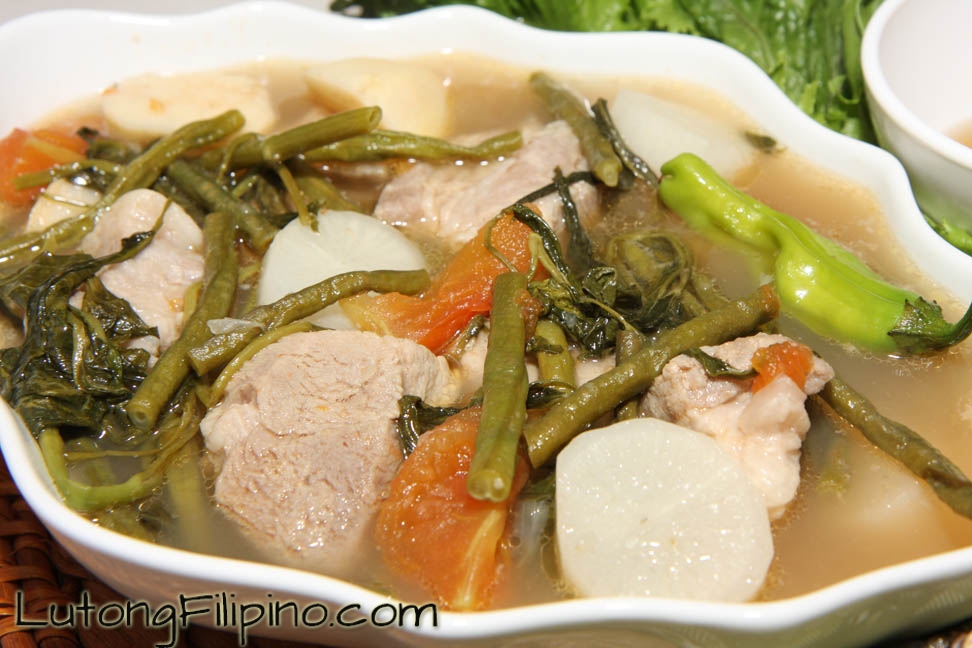
    If pork is to be used, the main parts included in the soup are pork neck bones, spare ribs, pork belly and even baby back ribs. The bony parts of the pig are usually preferred by many when cooking this dish.

    The meat is usually stewed along with spices such as onions and tomatoes as well as its souring agent – tamarind for example. However, other ingredients may also be added to further enhance the taste such as okra, gabi, kangkong, eggplant, sitaw and labanos. These ingredients are often added to create another version of the traditional sinigang.


    [yumprint-recipe id=’2′]

  • Lumpia

    Lumpia

    Lumpia is one of the dishes in the Philippines – rich in historical background. It is almost similar to the fried spring rolls in Southeast Asia and is named according to the Chinese term “lunpia,” which is another term for popiah – the popular spring roll.

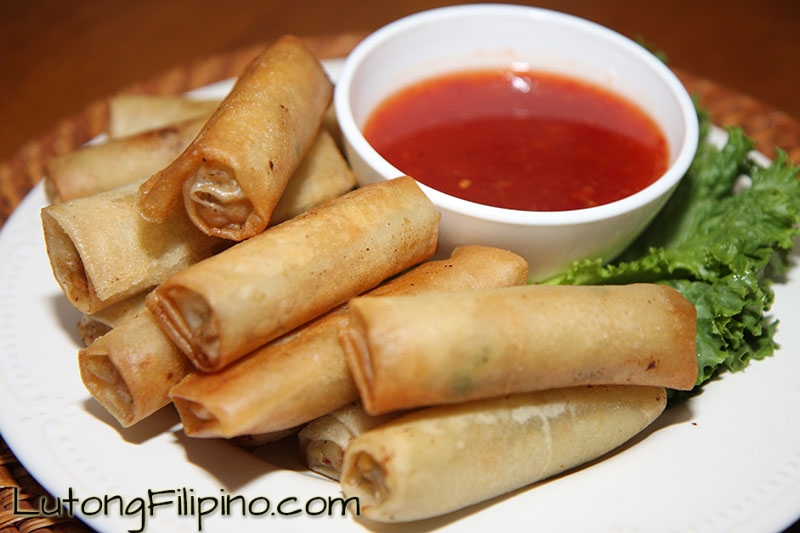
    The dish can either be fresh or fried. In the Philippines, the fresh lumpia is more of a snack while the fried lumpiang shanghai is best served with rice or as a viand. The dish settled both in Indonesia and Philippines after being brought from China.

    This meat-laden dish in the Philippines has a filling complete of ground pork or beef, carrots, potato, minced onion and other spices along with beaten egg. Some Filipinos use green peas or raisins in addition to the standard ingredients. It is commonly served with its unique sweet and sour sauce, which add flavor to the – already delicious dish. Nonetheless, dipping it on ketchup would be enough to make you crave for more.

    This dish is popularly served in special gatherings like fiestas and celebrations in the same way that Pancit Canton is served during these occasions. A celebration without lumpiang shanghai would be incomplete in the same way that your visit in the Philippines or learning how to cook Filipino dishes would be incomplete without it.

    So, if you are looking for a food that is not too heavy on the stomach but delicious nonetheless, lumpiang shanghai can give you that flavor and spice you’ve always wanted and desired.

    [yumprint-recipe id=’11’]

  • Pancit Canton

    Pancit Canton

    Do you have an inclination to eat noodle dishes and loving every moment of it? Well, Pancit Canton is a Filipino version of a noodle dish. It is one of the traditional cuisines served not only when there are occasions to celebrate but also during ordinary family gathering.

    From a historical viewpoint, Pancit Canton was introduced by the Chinese and has since then become part of traditional Filipino dishes. There are several types of noodles available in the market today. In fact, it is very common among fine restaurants and even in local restaurants.

    Did you know that Pancit Canton is never absent in birthday occasions? It is because basing on tradition – Pancit Canton can give long life. Apart from this interesting symbolism, it is one of the first delicacies you must taste whether you are just visiting the country or want to cook Filipino dishes on your own.

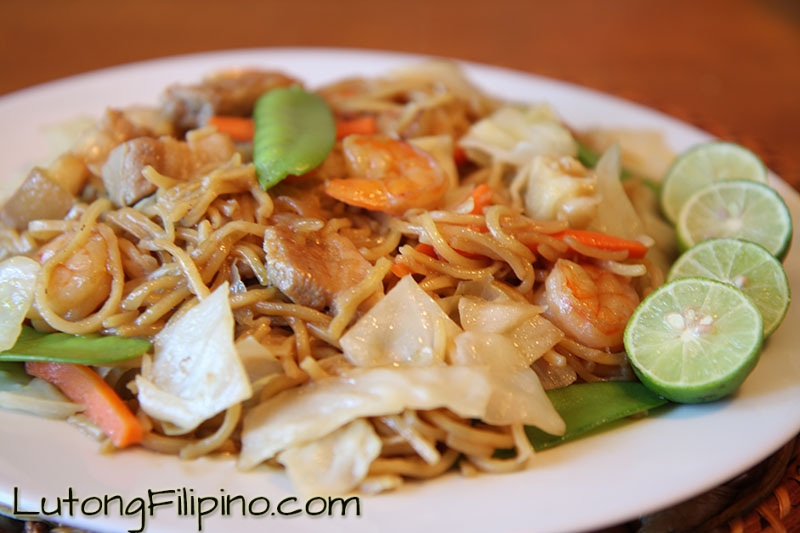
    The dish make use of several ingredients including pork or chicken meat, shrimp, sausage and vegetables like cabbage. The finished dish is colorful and festive – plus it can give carbohydrate loading.

    You can cook Pancit Canton at your very own home and serve it during ordinary meal time or on afternoon picnic or snacks. When it comes to this dish, the sky is the limit to the ingredients you can add. Some people even sprinkle powdered pepper to add some spicy flavor. You can use your imagination on what you would like to add – especially ones that will effectively enhance the dish.

    So, the next time you want to cook something delicious and can give you a carbohydrate load, try Pancit Canton – you won’t regret that you did.

    [yumprint-recipe id=’4′]